What is ferric chloride?
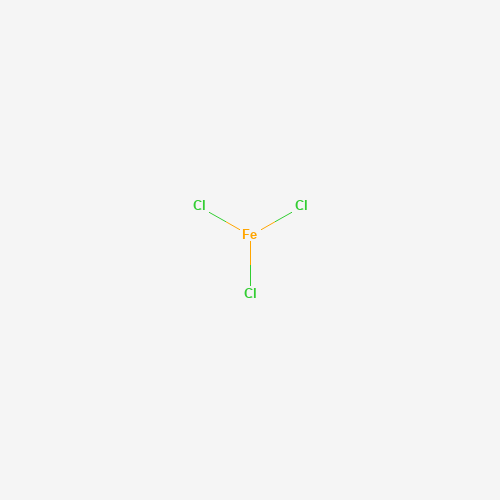
Ferric chloride is the industrial name for iron(III) chloride. The ferric chloride formula is FeCl₃: one iron atom in the +3 oxidation state carrying three chlorides, formula weight 162.2 g/mol. In water the Fe³⁺ ion hydrolyses within fractions of a second, shedding protons and building insoluble ferric hydroxide. That reaction explains why it coagulates water, why its solutions are strongly acidic, and why it is unforgiving of the wrong tank material.
Two CAS numbers appear in the trade and they are not interchangeable on a specification, an SDS or a customs declaration:
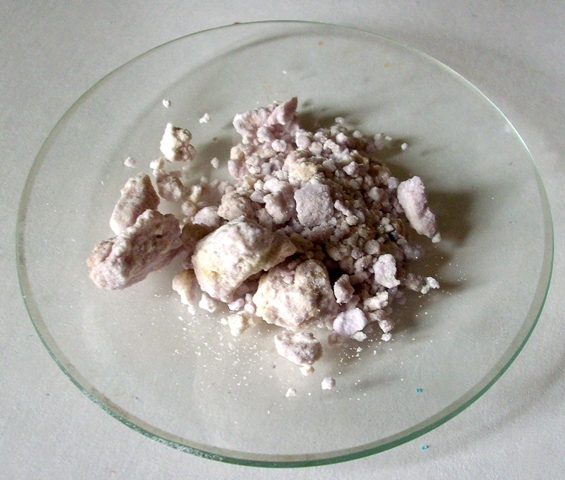
- Anhydrous ferric chloride — CAS 7705-08-0. FeCl₃, formula weight 162.2, iron content 34.4 % w/w. The ILO International Chemical Safety Card describes black-to-brown hygroscopic crystals that decompose on contact with water, releasing hydrogen chloride.
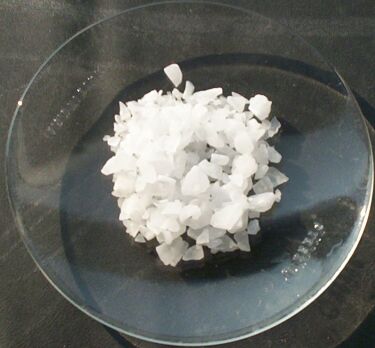
- Ferric chloride hexahydrate — CAS 10025-77-1. FeCl₃·6H₂O, formula weight 270.3. Water of crystallisation is 40 % of the mass, so the material is 60.0 % FeCl₃ and only 20.7 % iron.
The solution is normally declared under the anhydrous CAS number with its concentration stated; in North American practice “ferric” alone means the 40 % liquid. Our ferric chloride listing covers the liquid coagulant grades; ferric chloride 96 % is the high-assay anhydrous solid.
Commercial forms of ferric chloride
| Form | Formula | CAS | Appearance | Fe (calculated) | Main use |
|---|---|---|---|---|---|
| Anhydrous solid | FeCl₃ | 7705-08-0 | Green-black to brown powder or lumps, hygroscopic | 34.4 % | Lewis-acid catalysis; long-haul freight for on-site dissolution |
| Hexahydrate crystals | FeCl₃·6H₂O | 10025-77-1 | Yellow-brown lumps; melts near 37 °C | 20.7 % | Laboratory reagent, batch make-up, etchants |
| Aqueous solution | FeCl₃ (aq) | 7705-08-0 | Dark brown liquid, pH below 2 | 13–14.5 % | Water and wastewater treatment, sewer dosing, PCB etching |
The anhydrous salt is sold at assays around 96 % and above. The Irish EPA's water treatment manual states that the solid forms are unsuitable for dry feed. Dissolution is strongly exothermic: the CAMEO CHRIS datasheet gives a heat of solution near −200 cal/g, so an uncontrolled addition to a make-up tank will boil and spit acid mist.
Ferric chloride hexahydrate is easier to weigh and dissolves readily, at roughly 480 g/L at 30 °C. One detail catches people out: it melts at about 37 °C, so in a hot, unventilated warehouse drums of crystals can slump to a syrup. At 60 % FeCl₃, it takes 16.7 kg of hexahydrate to make the same solution as 10 kg of the anhydrous salt.
The ferric chloride solution dominates water treatment by volume. The Irish EPA manual records commercial liquor at 35–45 %; most municipal contracts land in the 38–42 % band, and Kemira's published PIX-111 data sheet states 37–42 % at a specific gravity of 1.38–1.46. Two standards govern potable duty: AWWA B407 for liquid ferric chloride in potable water, wastewater and reclaimed water, and EN 888:2023 for iron(III) chloride solution and hexahydrate in water intended for human consumption, with analytical methods referred out to EN 17215. Ask for the certificate of analysis against the standard your regulator recognises.
Why ferric chloride solution strength and density matter for dosing
Metering pumps move volume, not iron. Calibrate on a 40 % delivery, take the next tanker at 38 %, and the iron dose falls about 5 % at the same pump stroke — enough to show as a turbidity or phosphorus excursion before anyone checks the paperwork:
| Nominal FeCl₃ strength (w/w) | Typical SG at 20 °C | g FeCl₃ per litre | g Fe per litre | Fe, % w/w |
|---|---|---|---|---|
| 38 % | ~1.39 | 528 | 182 | 13.1 % |
| 40 % | ~1.41 | 564 | 194 | 13.8 % |
| 42 % | ~1.45 | 609 | 210 | 14.5 % |
The percentage column is fixed by stoichiometry; the grams-per-litre columns follow the batch's density. US EPA's Nutrient Control Design Manual works its design example on a 40 % solution at 1.4 kg/L, deriving 0.193 kg of iron per litre of product. Take a hydrometer reading on every delivery and express the set-point as mg Fe per litre of water treated.
Freezing behaviour is counter-intuitive. Published crystallisation data shows roughly −26 °C at 37 % FeCl₃ but only about −12 °C at 40 %: the liquor sits near a eutectic, so a stronger solution is less freeze-tolerant, not more. Outdoor tanks in cold climates need insulation, trace heating and recirculation, and the strength you specify should reflect the site's design winter temperature. Kemira quotes a minimum twelve-month shelf life; the product does not decay, but repeated cold cycling can leave crystal in the tank bottom that blocks suction strainers.
Materials of construction and corrosion
This is where ferric chloride earns its reputation. The Irish EPA manual states that the solution “is very corrosive and attacks almost all metals and concrete” and that iron-salt solutions are “corrosive to copper, copper alloys and ferrous metals”, so special materials must line storage containers and dosing equipment. It is acidic and a high-chloride oxidising medium at once — the combination that defeats stainless steel. ASTM G48, the pitting and crevice corrosion test for stainless steels, uses ferric chloride precisely because it is so severe.
- Tanks: fibreglass-reinforced plastic (FRP) or polyethylene, which US EPA names explicitly for liquid ferric solutions, or rubber-lined steel. Size for a 10-day to two-week supply.
- Pipework: PVC or CPVC, with PVDF, PTFE or polypropylene for higher duty. EPA, following WEF/ASCE guidance, recommends PVC pump heads and PVC or CPVC piping, fittings and valves.
- Never: bare carbon steel, stainless steel, galvanised steel, aluminium, copper, brass or bronze in wetted service — including the small fittings and instrument tappings where it goes wrong.
- Instruments: do not fit rotameters; EPA notes the sight glass stains opaque. Use magnetic or Coriolis metering.
- Civils: the product stains concrete, plant and clothing an indelible rust brown and attacks bare concrete, so bunds need an acid-resistant coating.
- Segregation: keep it away from alkalis and oxidisers. Because the solution is strongly acidic, contact with sodium hypochlorite liberates chlorine gas, and contact with liquid caustic soda or hydrated lime is violently exothermic. Use separate bunds and couplings.
Ferric chloride as a coagulant in drinking water and wastewater
In natural waters the coagulation reaction runs against bicarbonate alkalinity. The Irish EPA manual writes it as 2FeCl₃ + 3Ca(HCO₃)₂ → 2Fe(OH)₃ + 3CaCl₂ + 6CO₂. Three consequences follow. Alkalinity is consumed: by stoichiometry each milligram of FeCl₃ destroys 0.93 mg of alkalinity as CaCO₃, or 2.69 mg as CaCO₃ per milligram of iron dosed. pH falls. And the chloride stays in the treated water as calcium chloride, which the same manual warns may increase the corrosivity of the finished water. Our guide to coagulants vs flocculants separates the charge-neutralisation step from the bridging step that follows.
Turbidity, colour and natural organic matter
Ferric hydroxide floc sweeps out colloidal clay, colour-bearing humic material and a useful fraction of the organic precursors of disinfection by-products. The Irish EPA manual puts the optimum coagulation pH for lowland surface waters at 6.5–7.5 and for highly coloured upland waters at 5.5–6.5, and insists the optimum be reached by dosing acid rather than overdosing coagulant. Do not take a dose figure from an article, including this one. The manual calls the jar test the most important routine test at a coagulation plant, valuable for predicting trends rather than exact concentrations. Run the three stages: coagulant demand, optimum pH at that demand, then optimum dose at that pH.
Phosphorus removal
Chemical phosphorus removal is where iron dosing is most tightly specified, because the consent is numerical. US EPA's Nutrient Control Design Manual reports that for typical influent concentrations, ferric doses above 1.5 to 2.0 moles of iron per mole of influent soluble phosphorus remove 80 to 98 % of soluble phosphorus, while effluent total phosphorus below 0.10 mg/L requires ratios of about 6 or 7. A 2:1 molar ratio is 3.61 kg of iron per kilogram of phosphorus; at 0.193 kg Fe per litre of 40 % product, roughly 18.7 litres of solution per kilogram of phosphorus removed. The manual also stresses that rapid mixing at the dosing point is critical with iron salts: a poor injection quill wastes more reagent than a poor dose calculation.
Sludge conditioning and dewatering
Every milligram of iron dosed yields about 1.9 mg of ferric hydroxide solids before any phosphate precipitate. EPA puts the increase from metal addition at primary clarifiers at 50 to 100 % on primary sludge and 60 to 70 % overall, and dosing into secondary treatment at around a 2.0 molar ratio at 5 to 25 % on overall plant sludge. The compensation is that iron sludge behaves better — the same manual notes alum sludge may be harder to thicken and dewater. Ferric chloride is also used deliberately as a conditioner ahead of belt and plate presses, usually with lime and often alongside a cationic polyacrylamide or other polyelectrolyte to build a shear-resistant floc.
Hydrogen sulphide and odour control in sewers
In rising mains and long gravity sewers, iron dosing is the standard liquid-phase answer to septicity. Ferric iron first oxidises dissolved sulphide to elemental sulphur and is itself reduced to ferrous iron (2Fe³⁺ + S²⁻ → 2Fe²⁺ + S); the ferrous iron then precipitates further sulphide as iron sulphide (Fe²⁺ + S²⁻ → FeS). Both routes pull sulphide out of solution, so less H₂S partitions into the headspace to be oxidised to sulphuric acid on the pipe crown. Published kinetic work shows iron demand in real wastewater running far above the equilibrium ratio at short contact times and falling as contact time rises, and full-scale dose ratios sit well above stoichiometry. In-sewer dosing is therefore a field-trial exercise: injection point, retention time and residual sulphide monitoring matter more than the theoretical ratio.
Ferric chloride compared with alum, PAC and ferric sulphate
The honest comparison is cost per kilogram of active metal at the dose your own jar tests show, plus downstream consequences — not price per tonne.
| Coagulant | Metal | Alkalinity consumed, mg as CaCO₃ per mg product | Per mg of metal | Practical notes |
|---|---|---|---|---|
| Ferric chloride, FeCl₃ | Fe³⁺ | 0.93 | 2.69 | Strong pH depression; dense, readily dewatered floc; adds chloride; most corrosive of the group |
| Ferric sulphate, Fe₂(SO₄)₃ | Fe³⁺ | 0.75 | 2.69 | Same alkalinity demand per mole of iron; adds sulphate, not chloride; gentler on plant |
| Aluminium sulphate (alum), Al₂(SO₄)₃·14H₂O | Al³⁺ | 0.51 | 5.56 | Narrower optimum pH window; residual aluminium must be controlled; sludge harder to dewater |
| PAC and aluminium chlorohydrate | Pre-hydrolysed Al | Lower than alum per unit of aluminium; depends on product basicity | Much less pH depression, less sludge; higher cost per kg of metal | |
Ferric chloride consumes almost twice the alkalinity per milligram of product that alum does, so a soft water may need supplementary soda ash or hydrated lime for pH recovery — and that reagent belongs in the comparison. Against that, iron works across a broader pH range, makes a denser floc, performs well in cold water, removes sulphide and phosphorus at once, and leaves no aluminium residual to argue about. Where an oxidation step is wanted ahead of coagulation, plants sometimes pair iron salts with potassium permanganate; where ferrous iron is wanted, ferrous sulphate heptahydrate is the alternative. Our coagulants listing and the wider water treatment chemicals range set the options side by side.
Etching, PCB manufacture and metal surface treatment
Outside water treatment, ferric chloride's biggest role is as a copper etchant, through a straightforward redox couple: 2FeCl₃ + Cu → 2FeCl₂ + CuCl₂, followed by CuCl₂ + Cu → 2CuCl. Ferric iron strips copper from the laminate and is reduced to ferrous; the cupric chloride generated keeps etching until the bath loads with copper and the ferric reserve is exhausted. Engineers therefore control a bath on three variables: solution strength, usually tracked as specific gravity or degrees Baumé; free hydrochloric acid; and dissolved copper. Etch rate rises with temperature and agitation and falls steeply as the bath nears exhaustion, so spray etchers run on a controlled bleed-and-feed. Spent etchant is a mixed metal chloride liquor; electrolytic regeneration that recovers copper and restores ferric iron is standard where discharge consents are tight.
The same reaction underlies photoengraving, printmaking plates, chemical milling, pattern etching of Damascus and tool steels and decorative etching of stainless and nickel alloys. One nuance for procurement: etchant grades are specified on iron, free acid and low copper, while water-treatment grades are specified on heavy metals and insolubles. They are not automatically substitutable, so state the application on the enquiry.
What is the ferric chloride test?
The phrase usually means something quite different from plant work: the classic qualitative test for phenols. A dilute aqueous reagent, typically 1 %, is added to the unknown. Phenolic hydroxyls form intensely coloured iron(III) phenoxide complexes, so a blue, violet, purple, green or red-brown colour reads as positive; the reaction is written 3ArOH + FeCl₃ → Fe(OAr)₃ + 3HCl, and phenol itself gives a striking violet-purple. The colour varies with the substrate, and other readily enolisable or chelating groups can respond too, so the result confirms a class of compound and nothing more precise. It is qualitative, not quantitative. The reagent is a dilute laboratory solution, not the 40 % industrial coagulant — and in a water utility, “run a ferric chloride test” almost always means a jar test instead.
Handling, storage and safety
Ferric chloride is corrosive — UN 1773 for the solid, UN 2582 for the solution, both transport Class 8. CAMEO Chemicals describes the solution as highly corrosive to most metals and probably corrosive to tissue, noncombustible but liable to give off corrosive and toxic fumes on heating, and warns that corrosives in contact with metals can release flammable hydrogen. The ILO card adds violent reactions with alkali metals, allyl chloride, ethylene oxide and bases.
- PPE: splash goggles plus face shield for any connection or sampling task, acid-resistant gloves, apron and boots, and a dust respirator for the solids. Stains are permanent: treat overalls as consumables.
- Exposure limits: the Irish EPA manual cites an occupational exposure limit for iron salts as Fe of 1 mg/m³ over 8 hours and 2 mg/m³ over 15 minutes; check your own jurisdiction.
- Dilution: always add the salt or concentrate to water, never the reverse. Dissolution is exothermic and acid mist is the usual injury.
- Spills: contain, dilute and neutralise with dilute sodium bicarbonate or soda ash, as the CAMEO CHRIS datasheet recommends. The same source notes the material is harmful to aquatic life at low concentrations, so keep it out of drains.
- Infrastructure: eyewash and safety shower at fill points and pump skids, and dedicated keyed couplings so a delivery cannot go into the wrong tank.
None of this substitutes for the document that governs your site. Read the supplier's SDS for the exact grade and concentration you are buying and build your procedures and training from it.
What drives ferric chloride price and lead time
We quote on request, because the figure turns on variables only an enquiry can settle:
- Feedstock economics. Ferric chloride is made from an iron source and hydrochloric acid, or by chlorinating iron. Chlor-alkali pricing and the availability of spent pickle liquor or suitable iron oxide move the cost base more than any distributor does.
- Freight versus concentration. A 40 % solution is roughly 60 % water. Over short hauls the liquid wins on handling; over long ocean legs, cost per kilogram of iron often favours the solid — if the receiving site has a dissolution plant.
- Specification. A liquor for potable duty against AWWA B407 or EN 888 is a different product from a technical liquor for effluent duty, or an etchant grade.
- Packaging and seasonality. Lined ISO tanks, lined road tankers, HDPE IBCs and drums differ on cost and availability; dedicated Class 8 tank capacity is the usual bottleneck, and it tightens just as wet-season turbidity lifts coagulant demand.
Send us your ferric chloride specification — concentration, duty, volume per delivery, packaging and discharge port — and we will come back with grades, documentation and a factory-direct offer.