What scale is, and why it decides the economics of a water system
Scale is a hard mineral deposit on the surfaces a water system cannot afford to lose: the active layer of an RO membrane, heat exchanger tubes, cooling tower fill. It forms for one reason — water is concentrated, by permeate removal or evaporation, until a sparingly soluble salt passes its solubility limit and deposits on the nearest surface.
The cost is rarely the deposit itself. It is the differential pressure, the lost heat transfer, the unplanned clean-in-place, the acid wash that shortens membrane life, and the recovery the plant can no longer hold. An antiscalant, or scale inhibitor, lets a system run at or past nominal saturation without depositing.
The scalants you are actually fighting
Which salt limits your system depends on your feed analysis. The solubility products below are from the FilmTec technical manual.
| Scalant | Formula | Solubility product (temp.) |
|---|---|---|
| Calcium carbonate | CaCO₃ | 8.7 × 10⁻⁹ (25 °C) |
| Calcium sulphate | CaSO₄ | 6.1 × 10⁻⁵ (10 °C) |
| Barium sulphate | BaSO₄ | 1.08 × 10⁻¹⁰ (25 °C) |
| Strontium sulphate | SrSO₄ | 2.81 × 10⁻⁷ (17.4 °C) |
| Calcium fluoride | CaF₂ | 3.95 × 10⁻¹¹ (26 °C) |
| Silica | SiO₂ | Amorphous: approx. 120–150 mg/l at 25 °C |
| Calcium phosphate | Ca₃(PO₄)₂ | Varies with pH and species |
Calcium carbonate is strongly pH-dependent, so acid alone can control it; the sulphates are not, and trace barium can limit recovery by itself. Silica polymerises rather than crystallising, making it the hardest to inhibit and clean, while calcium phosphate is usually self-inflicted.
Iron deserves separate mention. Ferrous iron that oxidises in an aerated system forms ferric hydroxide — a fouling problem rather than true scale, for which threshold inhibitors are the wrong tool. It also makes everything worse: multivalent cations depress silica solubility and can precipitate anionic polymers.
How scale inhibitors actually work
This is the part most often skipped in product literature, and the part that explains every selection decision below. An antiscalant does not dissolve scale, sequester the hardness or stop the water being supersaturated. It interferes with the kinetics of crystal formation, by three mechanisms acting together.
1. Threshold inhibition — the key idea
A sequestrant works stoichiometrically: roughly one mole of chelant per mole of metal, so holding 400 mg/l of calcium by chelation needs an enormous dose. Threshold inhibition works nothing like that. At a tiny fraction of that requirement — parts per million against hundreds of parts per million of hardness — the inhibitor adsorbs onto the first sub-microscopic crystal nuclei and blocks the active growth sites on their surfaces. The nuclei never reach a thermodynamically stable size, so they redissolve. As the FilmTec manual puts it, scale inhibitors have a “threshold effect”: minor amounts adsorb specifically to the surface of microcrystals and thereby prevent further growth and precipitation.
Two consequences follow. A few mg/l can hold water several times supersaturated. And threshold inhibition is a delay, not a permanent state: it buys residence time. If holding time exceeds the inhibitor's induction period, scale forms regardless of dose.
2. Crystal distortion
Where nucleation does proceed, adsorbed inhibitor does not block growth evenly on every crystal face. The result is a distorted, rounded crystal instead of the dense interlocking calcite that forms tenacious scale: it adheres poorly, shears off under flow and cleans out easily. Phosphonates such as HEDP and the polycarboxylates are strong crystal modifiers; polyphosphates are weaker.
3. Dispersion
The third mechanism has nothing to do with crystal chemistry. Anionic polymers adsorb onto particles — crystallites, clay, silt, iron oxide — and impart a negative surface charge, so they repel each other and stay suspended. That is why polyacrylic acid and maleic copolymers earn a place in blends even where a phosphonate does the threshold work: it handles nucleation, the polymer keeps whatever forms in the bulk water.
None of it helps with suspended solids, colour or colloidal turbidity — a separate pretreatment problem solved upstream by charge neutralisation and bridging. See our coagulants vs flocculants guide.
The three chemistry families compared
Phosphonates: HEDP, ATMP, PBTC, DTPMP
Organophosphonates carry one or more C–PO(OH)₂ groups. The carbon–phosphorus bond separates them from phosphate esters and polyphosphates: it does not hydrolyse, so a phosphonate does not revert to orthophosphate in storage or normal service.
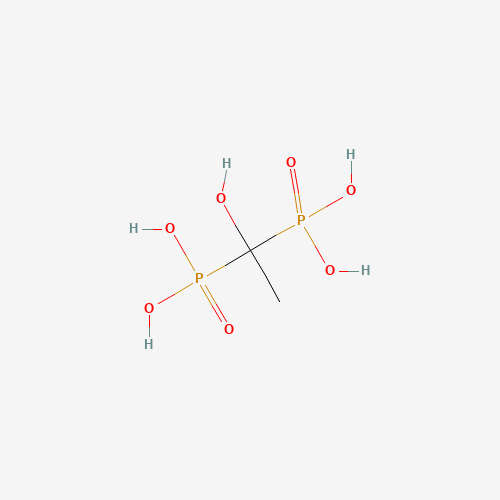
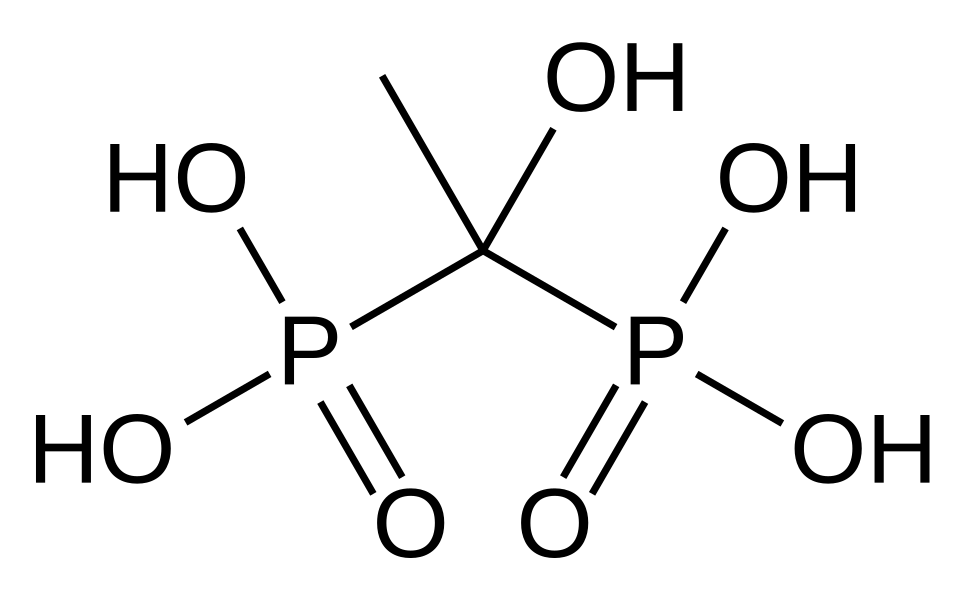
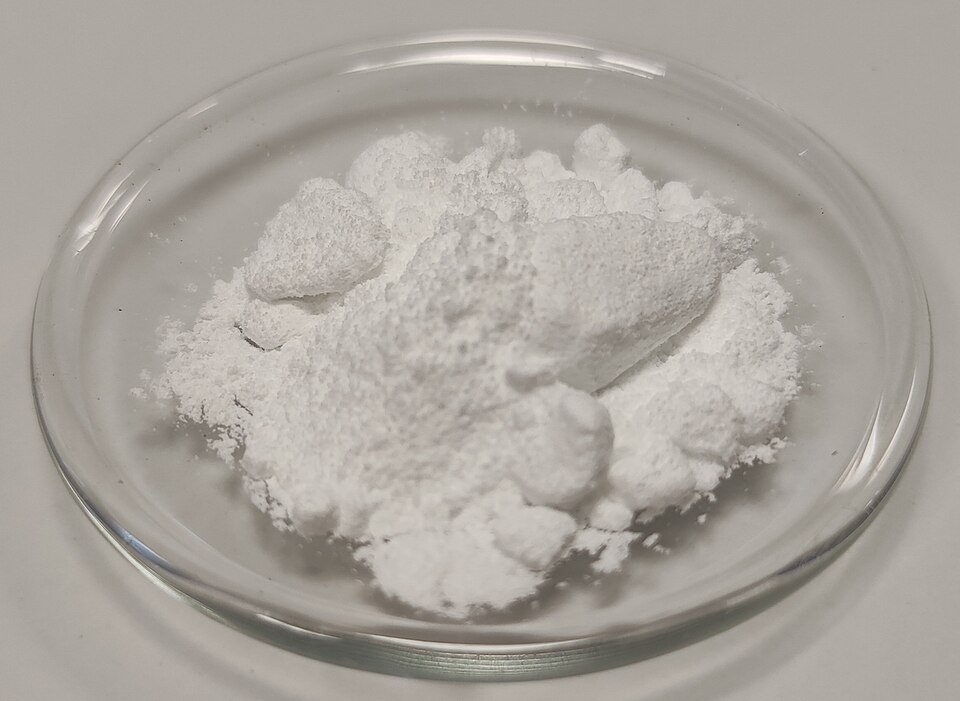
- HEDP (etidronic acid, C₂H₈O₇P₂, CAS 2809-21-4, MW 206.03): the most widely specified single phosphonate. Balanced carbonate and sulphate inhibition, good thermal stability and iron control, reasonable — not perfect — oxidant tolerance. Supplied as a strongly acidic solution around 60 %, or as the solid HEDP 98 % where freight weight matters.
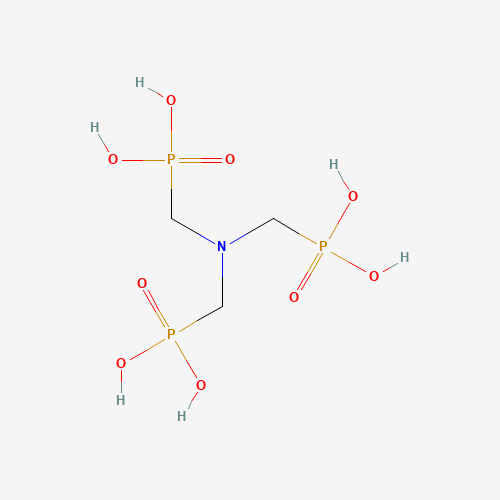
- ATMP (amino trimethylene phosphonic acid, C₃H₁₂NO₉P₃, CAS 6419-19-8, MW 299.05): three phosphonate groups on a nitrogen centre. Stronger carbonate threshold activity than HEDP at equal dose and better in high-hardness, high-pH water, but less stable to chlorine and bromine.
- PBTC (2-phosphonobutane-1,2,4-tricarboxylic acid, C₇H₁₁O₉P, CAS 37971-36-1, MW 270.13): one phosphonate plus three carboxylates. The most oxidant-stable common phosphonate and tolerant of high calcium — the usual choice for highly cycled, continuously chlorinated cooling water.
- DTPMP (diethylenetriamine penta(methylene phosphonic acid), C₉H₂₈N₃O₁⁵P⁵, CAS 15827-60-8): the most heavily functionalised — a powerful barium and strontium sulphate inhibitor that holds up hot.
The honest limits. Oxidant attack converts phosphonates to orthophosphate, which becomes a calcium phosphate scaling risk of its own. Chlorine-exposure tests in the patent literature rank stability PBTC > HEDP > aminophosphonates, with single-digit reversion for PBTC against roughly twenty per cent for HEDP and ATMP over 24 hours — a ranking, not a number for your system. Phosphonates also count toward total phosphorus in the discharge, are poorly biodegradable, and can form sparingly soluble calcium salts if overdosed.
Inorganic polyphosphates: SHMP and STPP
Sodium hexametaphosphate (SHMP) — Graham's salt, (NaPO₃)n, CAS 10124-56-8 — is the oldest threshold inhibitor still in mainstream use, and what people mean when they ask what SHMP is. It sequesters calcium and magnesium, inhibits at sub-stoichiometric dose and deflocculates clays. Sodium tripolyphosphate (STPP) (Na⁵P₃O₁₀, CAS 7758-29-4) is the shorter-chain relative, used more as a builder and sequestrant.
The limitation is structural. The P–O–P linkages hydrolyse, reverting to orthophosphate at a rate set by temperature, pH and species — published figures for pyrophosphate give a half-life of about two months at 50 °C against years at 20 °C and neutral pH. Reversion costs inhibition and hands you a calcium phosphate risk in exchange. FilmTec is explicit that hydrolysis of SHMP in the dosing tank must be avoided, because it both decreases inhibition efficiency and creates a calcium phosphate scaling risk, and that food-grade quality should be used — so make up fresh, cool, on a short rotation. SHMP is also weakest on sulphate scale and useless on silica.
Polycarboxylates: polyacrylic acid and maleic copolymers
Polyacrylic acid (PAA) (CAS 9003-01-4) and maleic-based copolymers are the dispersant backbone of modern formulations. Molecular weight is the specification that matters: roughly 2,000–6,000 Da grades are dispersants and threshold inhibitors, while high-molecular-weight grades behave as flocculants and thickeners — the wrong product entirely. Sulphonated acrylic copolymers tolerate calcium and iron far better than plain PAA, which is why they dominate in high-cycle cooling water and silica-bearing feeds.
The family is phosphorus-free, oxidant-stable, and the only one with real activity against silica polymerisation and iron and clay fouling. It is weaker on carbonate at equal dose, and plain PAA precipitates as its calcium salt if overdosed.
| Property | Phosphonates | Polyphosphates (SHMP, STPP) | Polycarboxylates (PAA, maleic) |
|---|---|---|---|
| CaCO₃ control | Strongest at low dose | Moderate | Moderate |
| Sulphate scales | Strong; DTPMP, PBTC best on Ba/Sr | Weak | Moderate; sulphonated grades best |
| Silica | Little effect | No useful effect | Only family with real activity |
| Iron, clay dispersion | Good iron control | Moderate | Best overall |
| Chlorine tolerance | PBTC good, HEDP fair, ATMP poorest | Not oxidised, hydrolyses anyway | Good |
| Hydrolytic, thermal stability | C–P bond stable; DTPMP best hot | Reverts to orthophosphate | Stable |
| Calcium tolerance | Good (PBTC), moderate otherwise | Moderate | Poor plain, good sulphonated |
| Phosphorus in discharge | Yes | Yes | No |
Where polyDADMAC fits — and where it does not
PolyDADMAC (poly(diallyldimethylammonium chloride), CAS 26062-79-3) appears constantly in antiscalant searches, so it needs saying clearly: polyDADMAC is a cationic coagulant, not an antiscalant. Its quaternary ammonium groups carry a permanent positive charge that neutralises the negative surface charge on suspended colloids, so they destabilise and can be removed by clarification or filtration. That is charge neutralisation, not threshold inhibition, and it has no useful activity against scale.
The confusion is actively dangerous in an RO plant. Antiscalants are anionic; polyDADMAC is strongly cationic. FilmTec warns that precipitation reactions may occur between polymeric scale inhibitors and cationic polyelectrolytes or multivalent cations such as aluminium or iron, and that the resulting gum-like products are very difficult to remove from membrane elements. Cationic coagulant carryover reaching an antiscalant dosing point is a classic way to write off a membrane train. If charge neutralisation is what you need, specify it from the coagulants or polyelectrolytes range, and monitor it so none reaches the membranes.
Selecting by system
RO and nanofiltration membranes
Specifying an RO antiscalant is a calculation, not a preference:
- Get a full, current feed analysis — calcium, magnesium, barium, strontium, bicarbonate, sulphate, fluoride, reactive silica, iron, aluminium, phosphate, TDS, pH, temperature. Barium and silica are most often missing and most likely to set the limit.
- Calculate the concentration factor. At 50 % recovery the concentrate is roughly twice the feed; at 75 % roughly four times. Every saturation check is run on the concentrate, never the feed.
- Run the scaling indices. Calcium carbonate is assessed by the Langelier Saturation Index (LSI = pH − pHs) below about 10,000 mg/l TDS and by the Stiff & Davis Stability Index above it — hence S&DSI for seawater. Sulphates, fluoride and silica are assessed as percentage saturation. On acid alone the concentrate index must be negative; FilmTec states that a good inhibitor allows a concentrate LSI below 1.5, many up to 1.8.
- Use the membrane maker's projection software — WAVE, IMSDesign or equivalent — with the supplier's own projection tool. These are the only legitimate source of a dose.
- Check the compatibility approval. Membrane makers list the antiscalants accepted for use with their elements; an unapproved product can affect warranty cover.
- Keep cationic polymer away. No cationic coagulant or flocculant should reach an anionic antiscalant or a polyamide membrane.
Two notes from practice. Silica is the usual recovery limit inland: amorphous solubility runs around 120–150 mg/l at 25 °C, is roughly flat to pH 9, rises sharply above pH 10 and is depressed by multivalent cations; ASTM D4993 gives the standard calculation. Seawater plants are held to 30–45 % recovery by osmotic pressure, so scaling pressure is lower — though FilmTec still advises an inhibitor above 35 %.
Cooling towers and evaporative condensers
Here the driver is cycles of concentration — the ratio of a conserved ion, or conductivity, in the recirculating water to the make-up. Five cycles means dissolved solids five times the make-up, and the inhibitor programme exists to let you hold more cycles, cutting make-up and blowdown together.
The second number, most often ignored, is the holding time index: HTI ≈ 0.693 × system volume ÷ blowdown rate, the time for an added chemical to fall to half its concentration. A long HTI means the inhibitor sits in a warm, aerated, often chlorinated system before it leaves — the condition that destroys oxidant-sensitive aminophosphonates and hydrolyses polyphosphates, pushing selection toward PBTC and sulphonated copolymers. Scale control sits alongside corrosion and microbiological control here; hydroxyphosphonoacetic acid (HPAA) is common where carbon-steel corrosion inhibition is needed in soft water. Treat them as one programme — they interact.
Boilers
Boilers are where antiscalant chemistry is usually the wrong answer. Scale control in a steam boiler is primarily a feedwater problem, solved by softening, dealkalisation or demineralisation. In higher-pressure drum boilers the internal chemistry follows established regimes — phosphate or caustic treatment, all-volatile treatment, oxygenated treatment — set out by bodies such as IAPWS, within narrow operating windows.
Organic treatment chemicals, phosphonates included, break down hydrothermally at boiler temperatures into low-molecular-weight organic acid anions and carbon dioxide, which acidify condensate and are implicated in cycle corrosion. That is why phosphonates stay in low-pressure service, where a chelant or polymer programme is a deliberate design choice. Follow your boiler maker's limits rather than transferring a cooling-water or RO product into steam service.
Dosing: why there is no single number
We will not publish a dose rate, and you should be sceptical of anyone who does. The correct dose is a function of feed analysis, recovery or cycles, temperature, pH, element type, holding time and the product's own inhibition curves. FilmTec's instruction is one line long: for dosage rates, contact the antiscalant manufacturer — and overdosing should be avoided. Excess anionic polymer or phosphonate can precipitate with calcium, aluminium, iron or cationic polymer carryover, producing a deposit harder to remove than the scale you were preventing.
The one published figure worth knowing illustrates the method rather than supplying an answer: FilmTec's SHMP guidance is to dose for a target concentration in the concentrate stream, which back-calculates to a much lower feed dose — in their worked example, a 75 % recovery system takes a feed dose one quarter of the concentrate target. Apply that logic to your own projection output, and verify active content against the certificate of analysis. For scale already formed the chemistries differ again — citric acid and sulfamic acid are the usual candidates, chosen against the deposit type and the membrane or metallurgy limits.
Handling, storage and safety
Read the supplier's safety data sheet for the specific grade before handling any of these products, and follow it rather than this summary.
- Phosphonate acids are corrosive. HEDP, ATMP, PBTC and DTPMP solutions cause severe skin burns and eye damage and may corrode metals. Use chemical-resistant gloves, eye and face protection and suitable overalls, with eyewash and safety-shower access at dosing points. They attack mild steel, so specify HDPE, polypropylene, PVDF, PTFE or lined components, and check elastomer compatibility on seals.
- Never mix neat products, and keep solids dry. Acidic phosphonates with alkalis, hypochlorite or cationic polymers can react vigorously or produce intractable precipitates, so dose each at its own point into flowing water. SHMP and STPP cake in humid storage; protect aqueous products against freezing.
- Check your discharge consent. Phosphonates and polyphosphates both contribute to total phosphorus, and phosphonates are poorly biodegradable. Limits can be tight — the EU Urban Waste Water Treatment Directive framework sets total phosphorus consents in the low mg/l range for larger works discharging to sensitive areas. Where phosphorus is constrained, evaluate phosphorus-free polycarboxylates.
What drives cost and availability
We quote on request rather than publishing prices, because the number depends on variables that appear only once a specification exists. Active content and form come first: HEDP at 60 % solution and HEDP 98 % solid are the same molecule at very different freight efficiency, so compare on active basis. Then raw material against formulated blend — HEDP, ATMP, SHMP or a polyacrylate as a raw material is a different proposition from a membrane-approved antiscalant blend — and grade, since technical versus food grade moves both price and supply base. For polycarboxylates, molecular weight, solids and monomer ratio define the product. Packaging, annual volume and destination do the rest. The full range sits in the water treatment chemicals catalogue.
Specify it against your water, not against a datasheet
Send a feed analysis, the system type and the recovery or cycles you are trying to hold, and we can advise which chemistry family fits and quote the grade, form and packaging to match. Where a membrane plant is involved, bring your projection output — it is the document that settles the dose. Contact our technical sales team with your specification.