What "food grade" actually means — and who defines it
Ask five suppliers for a "food grade" chemical and you can get five different answers: one quotes a pharmacopoeial grade, one a food-additive specification, one says the material is "suitable for food use", and two send a technical datasheet with no purity criteria at all. For a procurement manager or QA lead that ambiguity is a real risk, because the wrong grade can invalidate a HACCP plan or force a recall long after the drums have been emptied. This guide is written for commercial and industrial buyers, not consumers.
There is no single global legal definition of "food grade". It is shorthand for a material conforming to a recognised purity specification for use in or around food, and which specification matters depends on your market and application. Four families of standard do the work.
Food-additive compendia
In the United States the reference point is the Food Chemicals Codex (FCC), a compendium of monographs covering the identity, quality and purity of food ingredients. Published by the Institute of Medicine from 1966 and acquired by the United States Pharmacopeia (USP) in 2006, it runs in numbered editions, FCC 14 being the current series. An FCC monograph gives a definition, identification tests, an assay range and limits for specific impurities — detail a technical datasheet rarely contains. Internationally, the Joint FAO/WHO Expert Committee on Food Additives (JECFA) maintains its own specifications in the Combined Compendium of Food Additive Specifications.
Regional food-additive law and E-numbers
In the European Union, Regulation (EC) No 1333/2008 lists which additives are authorised and assigns each one an E-number; Commission Regulation (EU) No 231/2012 then lays down the specifications — origin, assay and purity criteria, including limits for individual heavy metals. The entry for sorbic acid (E 200), for instance, requires a content of not less than 99% on the anhydrous basis, with arsenic not more than 3 mg/kg, lead not more than 2 mg/kg and mercury not more than 1 mg/kg. That is what a legally defined food grade looks like: a parameter, a method and a ceiling, not an adjective. An E-number therefore tells you the substance is an authorised EU additive and that a published specification exists for it, which is why materials such as citric acid (E330) and ascorbic acid (E300) are commonly traded under their additive codes.
Pharmacopoeial grades
USP–NF, the European Pharmacopoeia, the British Pharmacopoeia and the Japanese Pharmacopoeia publish monographs for active substances and excipients. These are pharmaceutical standards, not food standards, and are not interchangeable by default: a pharmacopoeial monograph may be tighter on some attributes and silent on others that matter in food, such as allergen cross-contact. Many ingredients are made to a multi-compendial specification — one lot released against USP, Ph. Eur. and FCC — which is the easiest material to document.
Food-contact and hygiene rules
Separately from the purity of the substance, the law regulates what touches food. In the EU, Regulation (EC) No 1935/2004 requires materials and articles intended for food contact to be made under good manufacturing practice and not to transfer constituents to food in amounts that could endanger health, unacceptably change its composition or deteriorate its taste and smell. These rules cover packaging, processing aids and cleaning chemicals as much as ingredients, and are often why a technical chemical cannot be used in a food plant even where it never enters the product.
Food grade vs technical grade: what actually differs
The commonest misconception is that food grade is a different molecule. It is not. Food grade citric acid and technical citric acid are both citric acid; food grade and industrial caustic soda are both sodium hydroxide. What differs is everything around the molecule.
| Attribute | Food grade | Technical / industrial grade |
|---|---|---|
| Defining document | Published monograph or legal specification (FCC, JECFA, EU Reg. 231/2012) | Supplier's own datasheet |
| Assay | A range, by a compendial method, with identity tests | A minimum only, often by a supplier-chosen method |
| Impurity profile | Named impurities, numerical ceilings, specified methods | Few named impurities; route by-products may be untested |
| Heavy metals | Limits per element: lead, arsenic, cadmium, mercury | Often none, or a legacy generic "heavy metals" figure |
| Processing aids | Only food-cleared aids; stabilisers must be food-legal | Any cost-effective aid, cleared for food use or not |
| Plant and hygiene | Segregation, allergen management, pest control, potable water | Industrial housekeeping; shared non-food lines are normal |
| Management system | HACCP-based, often certified to a food safety scheme | Typically ISO 9001 only |
| Packaging | Food-contact-compliant, dedicated or certified clean | General-purpose or reconditioned; prior cargo unknown |
| Traceability | Lot-level both ways, retained samples, defined shelf life | Batch number only; may stop at the trader |
| Documentation | CoA against the monograph, plus allergen, GMO and origin statements | Datasheet and SDS; CoA with few parameters |
Two rows matter most. Processing aids are where otherwise identical products diverge sharply, because an industrial grade may legitimately contain a stabiliser, chelant or anti-caking agent chosen purely on cost and performance. And plant hygiene means a food grade claim is partly a statement about a factory, not only about a drum: material made on a line that also runs solvents or mining reagents cannot be made food grade retrospectively by analysis.
Documentation a buyer should demand
Grade claims are only as good as the paperwork behind them. For any food, beverage, supplement or food-contact application, ask for the following before ordering:
- Specification sheet naming the monograph it is written against — "complies with FCC", or "complies with Commission Regulation (EU) No 231/2012" — with every parameter, limit and test method.
- Lot-specific Certificate of Analysis showing actual results against that specification, with lot number and manufacture and retest dates. A "typical values" sheet is not a CoA.
- Safety Data Sheet in the format and language your destination requires, plus allergen and GMO statements and a BSE/TSE statement where a raw material could be of animal origin.
- Food safety management evidence: a HACCP plan summary, and certification to a recognised scheme where your customers demand it. ISO 22000 specifies requirements for a food safety management system; FSSC 22000 builds on it with sector prerequisite specifications and has been recognised by the Global Food Safety Initiative since 2010, which matters because many retailers accept only GFSI-recognised certificates. The underlying expectations trace back to the Codex Alimentarius General Principles of Food Hygiene (CXC 1-1969), revised in 2020 into a good hygiene practice chapter and a HACCP chapter.
- Kosher and halal certificates where your market requires them, from a body your customer recognises.
- Manufacturing site identity, since audit rights and traceability depend on knowing which plant made the lot.
- Declaration of compliance for food-contact packaging, with the specification and previous use confirmed.
One practical habit: write the monograph reference into the purchase order line, not just the enquiry email. "Citric acid anhydrous, food grade, complying with FCC and EU Reg. 231/2012, CoA per lot" is enforceable; "food grade citric acid" is an invitation to a dispute.
Why food grade costs more
The premium is structural, not a marketing surcharge. A tighter impurity and heavy-metal profile usually means extra crystallisation, distillation, filtration or ion-exchange steps, with yield loss at each one. Food-legal stabilisers and feedstocks come from a narrower, dearer market. Segregated hygienic plant, cleaning validation, pest control and trained staff carry fixed overheads spread across smaller campaigns, and per-lot compendial testing, retained samples and audits add cost to every batch. Because the gap varies by product and volume, have both grades quoted when an application is genuinely borderline.
When technical grade is genuinely the right choice
Over-specifying is its own waste. Technical or industrial grade is the correct, defensible choice when the chemical never contacts food and its impurity profile is immaterial to the outcome: water and effluent treatment, boiler and cooling-water conditioning, metal cleaning, mining, pulp and paper, textiles, construction chemistry, and non-food intermediates where downstream purification removes the impurities anyway. Our industrial chemicals and water treatment chemicals ranges exist for exactly these duties.
Three caveats: clean-in-place chemistry used inside a food facility is not automatically "non-food", since residues can carry over; a processing aid is regulated even if removed later; and feed grade is its own category, not a synonym for technical grade.
Worked examples: food grade vs technical grade, product by product
Food grade hydrogen peroxide
Hydrogen peroxide is traded industrially at concentrations well above anything sold to consumers, and it illustrates the grade question clearly, because the difference lies largely in the stabiliser package. All commercial peroxide contains stabilisers to suppress catalytic decomposition; industrial grades can use whichever perform best, while material for food use must meet a published food specification that constrains both impurities and the aids present.
US regulation is unusually explicit. The GRAS listing at 21 CFR 184.1366 incorporates Food Chemicals Codex specifications by reference and permits defined uses at defined levels — as a germ-control agent in milk for cheesemaking at up to 0.05%, and in starch and corn syrup at up to 0.15%. For packaging, 21 CFR 178.1005 permits an aqueous solution of not more than 35% hydrogen peroxide to sterilise listed polymeric food-contact surfaces, requires conformity with Food Chemicals Codex and specified USP requirements including acidity and chloride, and sets a residue limit of 0.5 ppm in distilled water packaged under production conditions.
A note on terminology, because the phrase attracts confusion: "food grade hydrogen peroxide" is a purity specification for industrial and commercial use — aseptic filling, dairy and starch processing, packaging sterilisation — not a consumer product. Concentrated hydrogen peroxide is a strong oxidiser that causes severe burns and can accelerate combustion. This article gives no guidance on internal or personal use at any concentration. Industrial buyers should specify concentration, stabiliser requirement and governing specification, and read the supplier's SDS before handling.
Food grade lye: caustic soda and sodium hydroxide
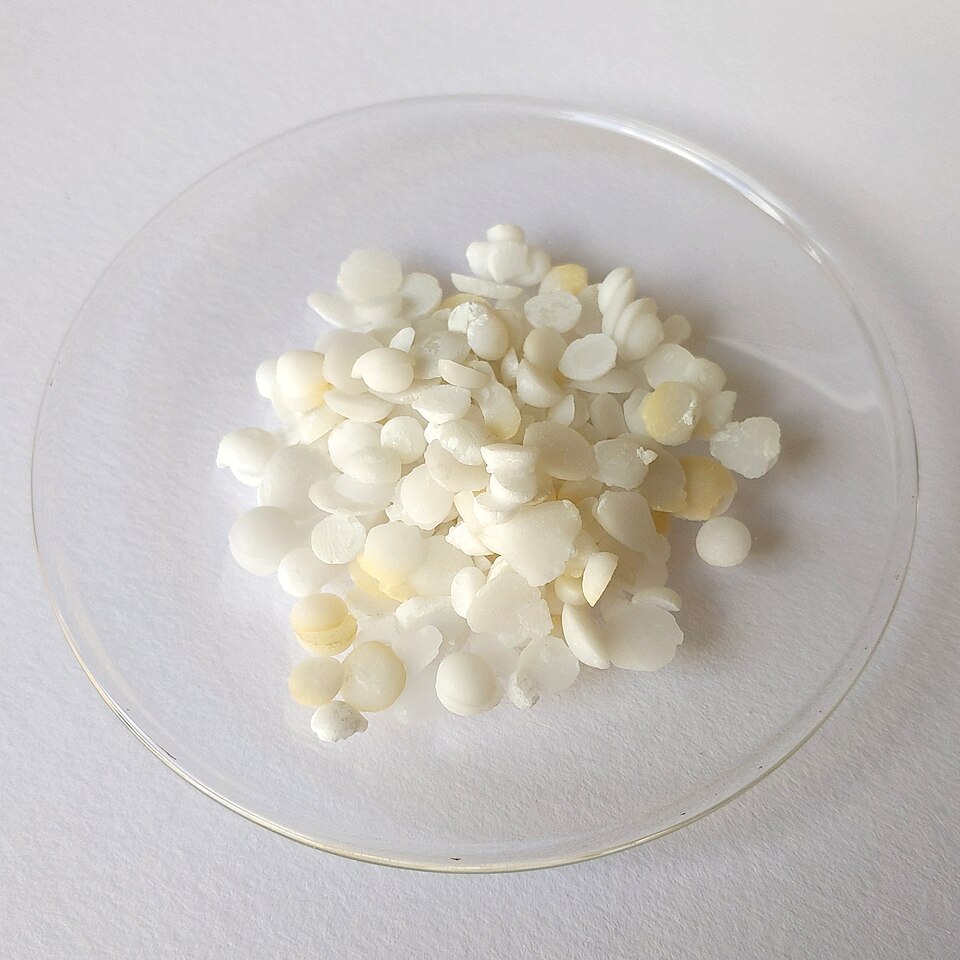
"Lye" is the trade name for sodium hydroxide, sold as caustic soda flake, pearl, or as 50% liquid caustic soda lye. Food uses are long established — pretzel dipping, olive curing, nixtamalisation of maize, cocoa alkalisation, peeling and CIP — and in the EU sodium hydroxide is an authorised additive, E 524.
Here the grade question turns on the chlor-alkali production route. Some historic capacity used the mercury-cell process, which created the potential for trace mercury in the product; membrane and diaphragm cells do not. The mercury-cell technique was ruled out as a best available technique in Commission Implementing Decision 2013/732/EU, with EU operators required to comply by 11 December 2017 — but origin remains a sensible question to put to any global supply chain. Beyond that, food grade caustic soda is specified on assay and total alkalinity, carbonate and chloride, iron and heavy metals; rayon and other high-purity industrial grades are tight on some of the same parameters for entirely different reasons. Potassium hydroxide raises identical questions where potassium chemistry is needed. Both are severely corrosive and dissolve exothermically.
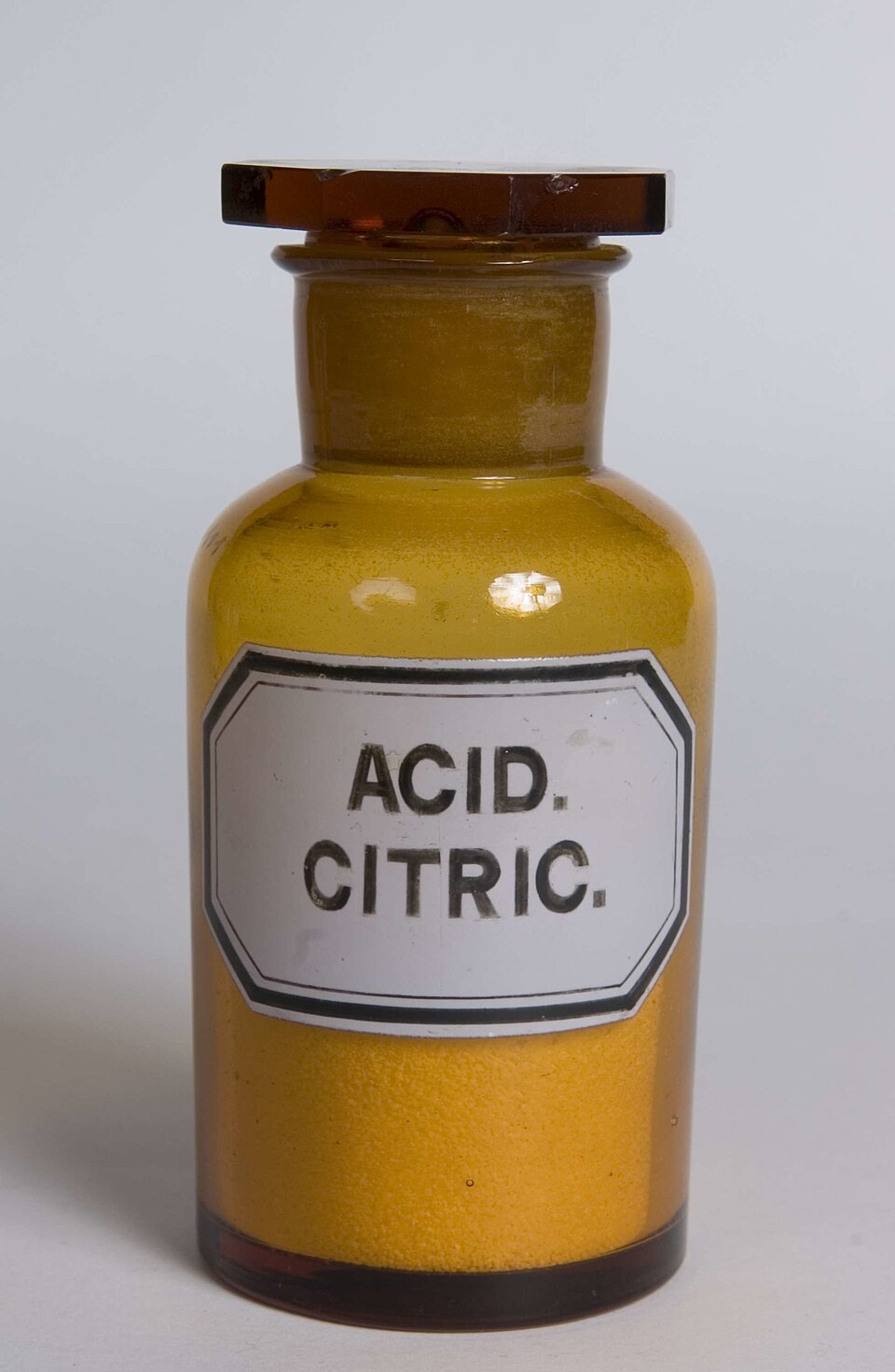
Food grade citric acid
Citric acid is made industrially by submerged fermentation of carbohydrate feedstocks, commonly using Aspergillus niger, then recovered and crystallised. Because fermentation is the shared starting point for both grades, the differentiator is downstream purification and the plant. Food grade is specified against FCC or the EU additive specification on assay, water content, sulphated ash, oxalate, sulphate and heavy metals; technical citric acid serves descaling, metal cleaning and detergents, where a looser impurity profile is irrelevant. Confirm anhydrous versus monohydrate explicitly.
The practical trap with citric acid is not purity but allergen and origin documentation: the feedstock may be maize-, cassava- or molasses-derived, which drives GMO and allergen statements and sometimes kosher or halal status. Ask about feedstock and origin, not just assay — the same applies across the acidulant family, including lactic acid 80% (E270).
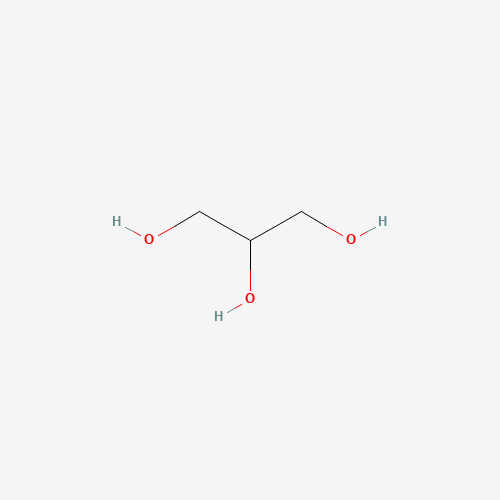
Food grade glycerin
Glycerin is the product where getting the grade wrong has caused the most harm historically, and where documentation discipline is strictest. Crude or technical glycerine — typically a co-product of biodiesel or oleochemical processing — is a genuinely different material from refined pharmaceutical and food grade glycerin, carrying salts, methanol, water and organic residues.
The critical impurities are diethylene glycol (DEG) and ethylene glycol (EG), which have caused mass poisonings when contaminated glycerin entered medicines. In May 2023 the US FDA issued guidance on testing glycerin, propylene glycol, sorbitol solution and other high-risk drug components for DEG and EG, superseding its 2007 glycerin guidance; the compendial limit test is a monograph requirement, and FDA's expectation is that manufacturers test incoming material rather than rely on a supplier certificate alone. If you buy glycerin for any ingestible or topical use, treat per-container identity and DEG/EG testing as non-negotiable, insist on a lot-specific CoA against the relevant monograph, and know the refinery.
Baking soda: food grade sodium bicarbonate
Sodium bicarbonate is chemically simple and commercially fragmented. The same compound is sold as food grade sodium bicarbonate (E500) for leavening, buffering and beverage use, as pharmaceutical grade, as feed grade for ruminant rations, and as technical grade for flue-gas dry sorbent injection, blasting media and pH control. Grades differ on assay, chloride, sulphate, iron, heavy metals, insoluble matter and — importantly for bakery work — particle size and flow aids, since physical form drives reaction rate and dosing accuracy as much as chemistry does. Related alkalis divide the same way: soda ash is traded across both technical and food specifications. "Bicarb" alone is not a specification.
A note on food grade Epsom salt
Magnesium sulfate — Epsom salt in its heptahydrate form — is traded in agricultural, technical, food and pharmaceutical grades, with the agricultural grade dominating by volume. Buyers asking for "food grade Epsom salt" generally need heptahydrate meeting a food-additive or pharmacopoeial specification, with controlled heavy metals and a defined hydrate form, not a fertiliser-grade product. Because the hydrate state changes magnesium content per kilogram, confirm the hydrate explicitly.
Handling, storage and safety
Grade affects purity, not hazard. Food grade hydrogen peroxide is the same oxidiser as the industrial material; food grade caustic soda is the same corrosive alkali. Proportionate precautions apply to all of them:
- Obtain and read the supplier's current Safety Data Sheet before the first delivery, and base your risk assessment, PPE selection and emergency procedures on it and on local regulation.
- Segregate incompatibles. Oxidisers away from organics and reducing agents; acids away from alkalis, hypochlorites and sulphides; peroxide away from metals and metal salts that catalyse its decomposition.
- Protect food grade stock from the rest of the warehouse. Dedicated racking or rooms, intact outer packaging, no decanting into unlabelled containers, and no shared transfer equipment between food and non-food materials.
- Control the environment. Hygroscopic materials such as caustic soda, glycerin and many bicarbonates need sealed packaging and dry storage; some need temperature control to stay fluid or hold assay. Respect the retest or expiry date and rotate stock.
- Verify on receipt. Check seals, labels and lot numbers against the CoA, retain a sample, and run your own identity or key-parameter testing on a documented frequency.
Specifying grade correctly on your next enquiry
The question is never "is this food grade?" in the abstract. It is: which monograph, which assay range, which impurity ceilings, which packaging, which documentation, from which plant. A supplier who can answer all six is one your QA team can work with.
Send us the specification you need to meet rather than only the product name. Our special use chemicals range covers the food additives, acidulants and preservatives discussed above, and everything is quoted on request against your stated grade and documentation requirements. Contact our team with your application, target specification, volume and destination, and we will come back with the grade options and the paperwork.